Context
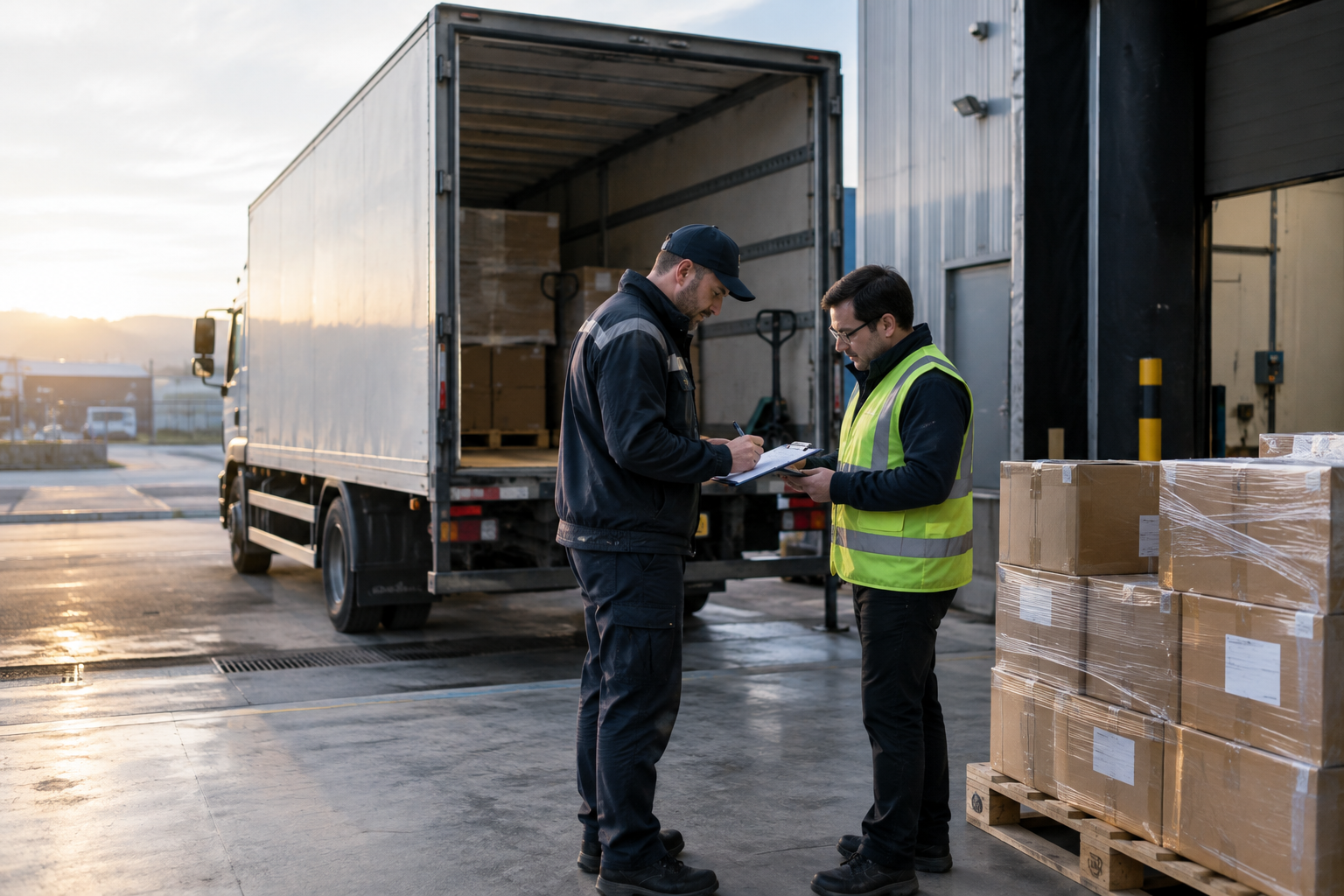
A global manufacturer of industrial equipment received goods from across Europe at its warehouse in Echirolles, near Grenoble. The site had a very precise receiving process. Drivers had to wait in an airlock, then check each delivery note with the client’s team to confirm what had arrived and what was missing.
This did not fit our standard network. A network driver on a multi-drop route could not spend that time on one stop. The check was therefore done the day before at our small local depot in Noyarey, which had few staff. Parcels also travelled from our large regional hub in Mions, near Lyon, to Noyarey, and some were lost on the way. Deliveries arrived late, on-time performance was around 65%, and the client was unhappy.
Operations asked for a custom solution. The case came to my desk in 2016, three months after I joined as supervisor.
Action
I started with the data. I analysed several months of flows, looking at volumes, parcel counts, weights and daily variations. The volume was steady enough for one vehicle a day, a 20 m³ van or a rigid truck depending on the load.
I then designed a dedicated flow with a subcontractor based near Lyon. It worked in three steps. First, a pre-alert the day before, so the driver knew exactly how many parcels to expect and their weight. Second, the driver collected the goods directly at the Mions hub, checked them on the spot and left for Echirolles. Taking the goods earlier in the network removed the transfer to Noyarey and saved one full day. Third, as a dedicated driver, he had time to wait at the site and complete the delivery check with the client’s team.
I went on site several times with our sales team, the operations teams of Mions and Noyarey, and the subcontractor. Together we negotiated the rates and set the cut-off times. I then presented the solution to the client.
Impact
On-time delivery rose from around 65% to 91%. Lost parcels between depots stopped, since the goods no longer went through Noyarey. The client relationship recovered, and the account stayed with us.
The solution is still running today, almost ten years later.